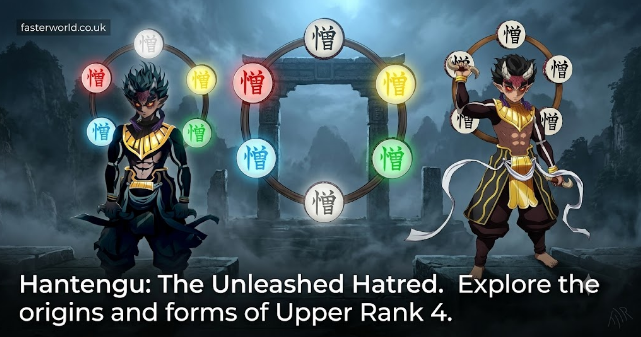
When the Swordsmith Village Arc hit screens, fans knew to expect intense battles. But nothing quite prepared the audience for the terrifying arrival of Upper Rank Four’s ultimate weapon. While Hantengu spends most of his time weeping and cowering, his dynamic changes completely when pushed into a corner. The manifestation of his absolute malice is Zohakuten, the Clone of Hatred.
This child-like yet incredibly lethal entity completely redefined the stakes of the battle, pushing a Love Hashira and a marked Tanjiro Kamado to their absolute limits. Let’s break down everything you need to know about this major antagonist, from his unique Shinto design origins to his devastating multi-elemental powers.
Who Is Zohakuten in Demon Slayer?
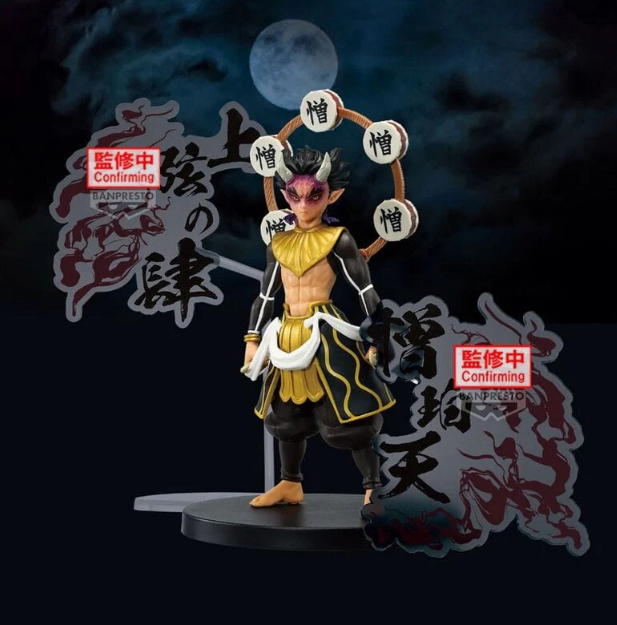
Zohakuten is not an independent demon; he is the ultimate combined form of Hantengu’s primary emotion clones: Sekido (Anger), Karaku (Pleasure), Aizetsu (Sorrow), and Urogi (Joy).
When Tanjiro manages to corner Hantengu’s tiny, true main body, Sekido forcibly absorbs the other three clones into himself. This gruesome fusion creates Zohakuten. Despite embodying Hantengu’s deeply warped sense of victimhood, Zohakuten manifests as a young, intensely muscular boy with narrow golden eyes and a permanent glare of absolute disgust.
ALSO READ: West Ham vs Man United Latest Results Stats & Transfer News
Unlike the cowardly main body, Zohakuten carries an overwhelming, suffocating presence. His aura alone was so malicious that it caused Tanjiro chest pain and physically paralyzed Genya Shinazugawa from sheer terror.
The Shinto Design Inspiration
Creator Koyoharu Gotouge heavily leaned into Japanese folklore when designing Upper Rank Four. Zohakuten’s visual appearance is a direct reference to Raijin, the Shinto god of lightning, thunder, and storms. He floats effortlessly in the air, backed by a floating ring of traditional Japanese drums (Taiko drums) attached directly to his back. Each drum features the kanji character for “Hatred” (Zou).
Blood Demon Art and Devastating Abilities
What makes this form so dangerous is that he does not replace the other clones’ abilities—he amplifies them while adding a massive power upgrade of his own. He can channel every single element used by the previous sub-clones simultaneously through his main technique.
1. Flora Manipulation (Wood Dragons)
Zohakuten’s core Blood Demon Art is the ability to manipulate and grow massive wood structures. By tapping his drums with his bone-like sticks, he spawns giant, multi-headed wood dragons that can stretch across vast distances. These dragons can grow smaller dragons from their own bodies, making them nearly impossible to completely avoid or cut through.
2. Multi-Elemental Attacks
Instead of relying on physical strikes, Zohakuten unleashes the fused techniques of the clones directly through the mouths of his wood dragons:
- Crazed Cry of Thunderdeath: A combined blast that simultaneously shoots lethal lightning bolts and crushing sonic waves from the dragon heads.
- Compressed Sound Waves: A specialized scream originating from his own mouth that can deform and shatter human bone on contact.
- Aerokinesis and Spear Projection: He can generate structural wind blasts that leave massive craters in the earth, alongside long-range kinetic spear projections.
Hantengu’s Clones: The Pieces of the Puzzle
To truly understand his strength, it helps to see how his component parts stack up. Each clone brings a specific elemental disaster to the fusion.
| Clone Name | Core Emotion | Kanji Location | Primary Power / Weapon |
| Sekido | Anger (怒) | Tongue | Lightning generation via Khakkhara staff |
| Karaku | Pleasure (楽) | Tongue | Wind manipulation via Maple Leaf Uchiwa fan |
| Aizetsu | Sorrow (哀) | Tongue | Long-range physical strikes via Yari spear |
| Urogi | Joy (喜) | Tongue | Sonic screams and avian flying physiology |
| Zohakuten | Hatred (憎) | Drums | Wood Dragons + Combined elemental mastery |
Zohakuten vs. Mitsuri Kanroji: The Ultimate Clash
The true testament to Zohakuten’s terrifying power scale was his fight against Mitsuri Kanroji, the Love Hashira.
When Mitsuri arrived to save Tanjiro, she deployed her incredibly fast, whip-like Nichirin blade. Even with her unique muscle density and rapid reflexes, she was initially overwhelmed by his rapid-fire barrage of sound and lightning.
It forced Mitsuri to manifest her Demon Slayer Mark. Once marked, she possessed the raw speed and power to slice through his wood dragons faster than they could regenerate. However, Zohakuten possessed infinite stamina. Because he was a clone, beheading him would not kill him; the slayers had to find Hantengu’s tiny main body elsewhere. Zohakuten simply played a game of attrition, successfully stalling Mitsuri until she was on the verge of physical collapse.
Why Is Zohakuten’s Personality So Twisted?
Zohakuten’s dialogue highlights the deeply hypocritical psychology of Hantengu. Despite being a mass-murdering demon who has consumed countless innocent humans, Zohakuten genuinely views himself as the victim.
When he looks at Tanjiro, Genya, and Nezuko, he refers to them as “evil fiends” and “sinners” because they are actively hunting a small, weak entity (Hantengu’s core body). He projects his own inner guilt outward as pure hatred, believing that his extreme violence is completely justified self-defense. This tragic lack of self-awareness makes him one of the most psychological and unsettling enemies in the entire series.
Conclusion
Zohakuten stands out as a brilliant narrative tool in Demon Slayer. He beautifully mirrors the core theme of Hantengu’s character—that hatred is often born from a pathetic, deeply rooted refusal to take responsibility for one’s own actions. Armed with unmatched elemental control and terrifying wood dragons, his presence during the Swordsmith Village Arc set a monumental gold standard for what it means to face an Upper Rank demon.
FAQs
Can Zohakuten be killed by decapitation?
No. Slicing off Zohakuten’s head will not kill Upper Rank Four. He is an emotional clone generated by Hantengu’s Blood Demon Art. The only way to destroy him permanently is to track down and decapitate Hantengu’s true, miniature core body.
Who voices Zohakuten in the anime?
In the original Japanese version, Zohakuten is voiced by the legendary Koichi Yamadera. In the English dub, he is voiced by Ben Diskin, who brilliantly captures the intense, deep-seated malice of the character.
Is Zohakuten the strongest form of Hantengu?
While Zohakuten is by far the most powerful combat variant used to battle the Hashira, Hantengu possesses one final clone called Urami (Resentment). Urami is a larger clone that hides the core body inside its heart as a final armor mechanism. However, in terms of sheer destructive capability and elemental manipulation, Zohakuten is the peak of Hantengu’s combat capabilities.
How old is Zohakuten?
Visually, Zohakuten appears to be a young boy around 10 to 12 years old. However, as a member of the Upper Ranks, Hantengu himself has lived and killed for over a century under Muzan Kibutsuji’s service.
Summary Table of Key Facts
- Anime Debut: Season 3 (Swordsmith Village Arc), Episode 7
- Manga Debut: Chapter 116
- Affiliation: Twelve Kizuki (Upper Rank 4)
- Component Clones: Sekido, Karaku, Aizetsu, Urogi
- Primary Counter: Mitsuri Kanroji (Love Hashira)
For more updates visit: FASTER WORLD